





getting on your nerves? bonus episode: getting out of your head, into your body
In this Wellness Weekender special of getting on your nerves?, Dr Anna Persaud is joined by wellness expert and integrative therapist Esther Triviño to explore somatic yoga, interoception, nervous system regulation and how movement, breath, sound and sensory cues can help us reconnect with the body and feel safe.


part 1: getting out of your head and into your body
Anna: Esther, this is an absolute joy to be with you today in Ibiza.
I’m talking to you today as my friend, but I’m also interviewing you on behalf of This Works for our podcast, getting on your nerves?, which is about how the nervous system affects our everyday experience.
At This Works, we like to educate people on how we can take care of the nervous system in order to take care of our experience.
To be in Ibiza with you is a really significant moment for me. We’ve known each other for at least seven years, and my journey in terms of nervous system care has taken me a long way.
You have been absolutely fundamental in teaching me how to manage my nervous system.
Esther Triviño, you are a very accomplished wellness expert. You’re an integrative therapist. You are experienced in yoga, because that’s where our journey began, but more than that, you are a therapist and you are also an expert in somatic experiencing.
What I’d love to talk to you about today is how you’ve helped me, your knowledge and experience of yoga, the nervous system and how the body and mind connect.
Because when I first met you, I was all in my head.
I was trying to overthink everything. I thought I could do everything with my brain, but I was really wrong.
And actually, you taught me that.
So Esther, welcome. Tell everybody more about you. How did you end up becoming an integrative therapist?
Esther: Thank you, Anna.
It’s a pleasure being here with you, but it’s even more of a pleasure to have accompanied you and been with you all these years.
Seeing your transformation has actually been one of the biggest processes that I have witnessed during my career, and I am very grateful.
I’m going to pick up something that you just said.
You said, “You helped me.”
I didn’t.
You helped yourself.
And that is one of the biggest starting points.
How did I become an integrative therapist?
It comes from my own story. I believe we all begin there.
I was very young and I met someone who was already going to psychotherapy, specifically Gestalt therapy.
At the time, I thought I had everything very clear.
But when I was talking to this person, I realised my actual world was falling apart inside of me.
I also saw that this person had something that I didn’t.
He mentioned that he was going to this therapy, and I thought: that might be something for me.
So I started that process.
I went very deep, until the point that I changed my life.
I used to work in luxury hospitality, and then I signed myself up for psychotherapy training.
After talking to my therapist at that time, she told me, “I think you actually have the skills.”
Therapy itself had brought me through a big crisis, and I realised that I liked treating people. I liked being with people.
I was already working with people, but I knew I wanted to work at another level.
So at the same time, I signed up for this Gestalt psychotherapy training with the people I consider to be some of the best in Spain – the people who actually brought Gestalt to Spain – and I signed up for my first yoga teacher training too.
Anna: So you started your training in Gestalt psychotherapy and yoga.
How did you bring the two disciplines together?
Esther: My final paper in Gestalt therapy already started blending them.
Then my teaching in yoga would always contain something from Gestalt: more awareness, more alignment, but also something that could really touch the person and create what we call an insight.
In the best cases, yogis know this too.
If you do regular yoga and meditation, you may have an insight.
Anna: So for someone who doesn’t know, what is an insight?
Esther: It’s like a deeper understanding.
It’s a moment where you suddenly realise something.
Then afterwards it looks obvious, but it had been there all the time.
I followed this path and I was already working, but then I became more and more curious.
So I also studied the Enneagram, which is another great tool.
Anna: What does the Enneagram focus on?
Esther: It talks about the ego or character.
From around zero to seven years old is where we develop a lot of our character and especially our defence mechanisms.
Then when you become an adult you can start to ask: do I actually need this?
Probably we don’t need all of it anymore.
You can identify these patterns, go deeper, let go of what is no longer needed and allow something new to come in.
Then other things just came along my path.
I became curious about massage, so then I became a bodyworker.
I started to see that it was all about the same thing: awareness.
That was my starting position.
I like accompanying people to become more aware.
That can start through therapy, which is probably the most confronting because you are sitting face-to-face with somebody.
Then yoga, which I would say is a middle path.
Then massage, which is more passive.
But many things can happen during a massage too.
So I started combining all of these things.
Instead of just a yoga lesson or just a massage, if the person is open enough or they are on a quest – and that inner attitude is important – then we can work through all three disciplines, or blend them together.
when trying harder creates more activation
Anna: I’ve spoken a lot about how much I need to do yoga.
I practise yoga at least four times a week at home.
When I first came to Ibiza – I had been coming for a long time – I thought, “I can never go on holiday and relax.”
Unfortunately, that’s one of the problems I have had with my nervous system.
I was very much stuck in fight or flight.
That’s a problem on holiday because there isn’t anything there to absorb my activation, and I don’t want to be distressed and I don’t want to distress my family or my friends around me.
Seven years ago, This Works had just been sold and I thought: you know what, I need to do something differently.
I found you and I remember thinking, I’m going to have a yoga teacher every day.
I’m going to do a workout. It’s going to wear me out, then I’m going to be really calm for the rest of the day.
My nervous system is going to be much less activated and I’m going to be able to chill out, proper Ibiza style.
What was I like? Tell me.
Esther: When I saw you, you were super, super fiery.
Every time I went into the session I was thinking, “Oh my God. Can I actually reach her level?”
I perfectly remember your words at that time.
Your idea was basically, “I burn the cortisol.”
You were in an alert mode.
Anna: Yes. Alert.
Esther: And what you were doing was actually stressing yourself out more.
But I knew at the time that I couldn’t confront you directly.
I needed to create trust.
That’s the first thing I do with my clients.
We really need to build trust, because there will be a moment where it isn’t about talking.
It’s our nervous systems relating to each other.
My nervous system can regulate yours.
That’s a very positive point.
So I thought, okay, I’m just going to follow her.
There will be a moment where I’ll see the gap.
That’s how I work.
Anna: You used to say that to me.
I remember you asking me to close my eyes and I couldn’t even close my eyes.
I couldn’t even sit there with my eyes closed.
I really, really struggled.
I didn’t feel it was safe to close my eyes.
Esther: I knew that as a somatic therapist, my job was just to stay there.
You needed to live your experience.
You were there opening and closing your eyes and I was just still.
That can also be very confronting.
Anna: Yes.
Esther: Until something clicked.
part 2: somatic yoga, interoception and feeling safe
what is somatic yoga?
Anna: So let’s talk about that.
I come to Ibiza. I want to relax. I can’t relax.
I find Esther and she basically allows me to do my yoga. She observes.
Then the next year I come back and by this point I’ve been doing more yoga.
My hips are beginning to seize up as well, so I have a problem with my hips.
But you do something with yoga, which I now know is somatic yoga, and that began a huge transformation.
Can you explain what somatic yoga actually is?
Esther: Somatic yoga, for me, is a deeper understanding of the discipline.
Actually, the yogis already had this.
They just didn’t have the words or the science behind it to explain it.
They were already focusing on these things.
There are types of yoga where you focus more on alignment, but basically yoga is awareness.
I always say in my lessons: without awareness, yoga is a sport.
I didn’t become a sports teacher.
I like transformation.
I like going deep.
In the best case, I like contributing to somebody’s life becoming better.
Even if it can just be 10%, I’m really happy.
Somatic yoga is more about going inwards.
We use this idea of sensing inside.
That means observing or being able to feel what is actually going on inside.
The thing is, we are so much outside of ourselves that we think, “Yes, I’m connected with the body and I know what is going on.”
Then I put you there and sometimes you don’t even know where you are.
Sometimes you cannot even feel.
So what I do is invite and create space for the other person to be able to feel.
And to feel, we need time.
Time is the key.
If you enter a room very fast and I ask you what was on your way in, you can’t remember anything.
If you go slowly, you might remember a few things.
If I tell you to be mindful about it, you will probably remember everything.
That is how we start realising what is happening inside.
That is called interoception.
It is the ability to perceive what is going on inside the body.
It is also very important to validate the experience.
Anna: So you asked me to move very slowly.
The thing that happened that was so surprising was that as I did the movements, thoughts came into my head that I hadn’t had before.
They were like recollections.
They were memories.
They were things that had got filed somewhere that weren’t very nice.
By doing these movements very slowly, I was aware of the sensation in my body, but with it came these thoughts.
That was hugely surprising for me because it began to access bits of my psyche that I had buried.
Esther: Yes.
That makes complete sense.
With the nervous system, we really need to move slowly.
We can also move the nervous system through time, but that is another topic.
What happened to you is that we probably already had the trust and you allowed yourself.
There is an inner permission there.
I thought you were ready, and you did too.
Then anything that has been stored in the past in the body can start coming up.
That can be memories.
It can be released through the body.
It can be shaking.
It can be emotion.
There are certain indicators or signals that something is coming out.
yoga, emotion and release
Anna: I definitely struggled with accessing difficult emotions.
For many years, I just avoided anything that was too uncomfortable.
Talk to me about how yoga can help you be connected with your emotions.
How does that work?
Esther: Yoga is a very ancient philosophy and practice.
At the time, it was more understood at an energetic level because they didn’t have the resources to prove things in the way we do now.
A lot of it is also related to somatics.
When you do yoga, you could say you are unblocking, stretching and cleaning your energetic channels.
We are full of them.
Through breath and movement, you are moving things.
Then emotions can come out.
Stress can come out.
Trauma can come out.
Memories from the past can come out.
They were already doing this without necessarily framing it in the language we use now.
Anna: So the emotions that people like me have avoided or find difficult to access can really come out when you’re doing yoga.
I found that I would cry sometimes.
It was very strange to me and I didn’t expect it.
But sometimes with you, feeling safe – really importantly, feeling safe – and never rushed, sometimes the tears would just come.
They felt cleansing.
They were like cleansing tears.
Esther: Yes.
And you just said something very important: safety.
It is about feeling safe.
That is where we can actually release.
And time is key.
Giving time.
In somatics, less is more.
We never overwhelm.
We never push.
The system knows perfectly when we are ready to release and it will happen naturally.
If we are properly accompanied, that can translate into many different things.
It could be overcoming a phobia, or simply having a feeling of much more space inside.
Feeling more secure in your life.
Feeling safer.
It can be like a big landing.
You feel more rooted and more grounded in your reality.
For me, when we go through a process – which is what we did – we use the skills of yoga, but it becomes a combination.
We always have a talk.
We frame the session.
We use yoga, but we also introduce other things and then we have integration.
In therapy, we can have numb parts.
For me, therapy is about being able to deal with those parts that we weren’t able to deal with before.
If I have more space because I feel safer, these things can start to come up and I can deal with them.
That means nothing is under the carpet.
Nothing is buried.
Nothing is shut down.
In the outside world, that can translate into not overreacting so strongly to certain situations.
Anna: Being triggered.
Esther: Exactly.
Sometimes it isn’t about what is happening in that moment.
It comes from another situation.
Something got stuck in your system.
It can be something really simple.
You could be six years old, riding a bicycle, fall off the bike and look around.
Nobody is there because maybe your mother was distracted.
You were scared.
You couldn’t let go.
You couldn’t cry.
Maybe you felt a lack of love or care.
And it got stuck.
Trauma and stress are very smart.
They go under the carpet so we can continue with our lives.
But at some point they knock on the door.
We may experience overreactions, phobias or fears that don’t feel logical.
A big part of that can be accessed through going into the body.
part 3: breath, humming, dancing and moving towards parasympathetic
using breath and sound to regulate the nervous system
Anna: We’ve talked about this in the series before with Professor Badre.
I think your type of yoga and your integrated approach have been very helpful for someone with my background.
With the kind of chronically dysregulated nervous system I have experienced, I found that your practice in particular helped my nervous system to feel safe.
The other thing – and there is a lot of science behind this – is the use of breathwork.
You taught me lion’s breath, for instance.
You bring breathwork into the practice.
We know that this can have a very powerful effect on the nervous system.
It can help us move from sympathetic to parasympathetic by having a longer exhale.
And we also om.
Esther: Yes.
Anna: We om together.
That’s also a very good way to bring in parasympathetic activity because of that reverberation in the throat.
I didn’t know that when I first started with you.
I was quite self-conscious about the om.
But now I’m like: bring the om.
And last year we were singing.
Esther: Yes. Why not?
Let’s get some parasympathetic activity.
Why not use self-regulation?
You can even be in a traffic jam driving and just make a sound.
Then we’re working with the vibration.
It will work.
why dancing can be regulating
Anna: And then there’s the dancing.
I love dancing.
One of the things I love about our practice is that you’ll say to me each day: what’s your intention? How do you feel?
I might say, “You know what? I’ve had a bad phone call from work this morning. I’m a bit activated. I feel a bit wired.”
Then you introduce something which gives me movement and fluidity.
Sometimes you introduce dance and freedom.
Talk to me about when you introduce that freedom, because I love that.
Esther: That’s beautiful.
As a therapist, of course, I need to try things myself before I share them and have them integrated.
At one moment in my life I thought: yoga is actually very rigid.
It is very linear.
Line, line, line.
It was created by men, for men, with men.
Then I thought, women are made from another material.
Society has changed and now women work and take care of the house, but our bodies and our ways of moving can be different.
I asked myself: can I give myself permission to do these slightly weird yoga sessions?
I don’t believe many people teach exactly as I do.
Gradually and slowly I dared myself to introduce more of what worked for me.
With dancing, especially if we aren’t doing choreography, you can start with something structured.
You can start with a choreography because you can mirror someone else.
You get inspired and you don’t feel ashamed.
If from the very first moment I tell you, “Close your eyes and dance,” you may feel very confronted.
So we go together.
Maybe I start dancing and you copy me.
Then one day, the system feels safe and you realise, “I can give myself permission. I can do whatever my body wants.”
By then, we have trained this ability to listen to what the body wants to do.
And that can allow release.
Sometimes we can be completing responses.
Things that we couldn’t complete before.
Sometimes we don’t even know what the original situation was.
The body just needs to make a movement.
The important thing is that we don’t do it fast.
You do it in super slow motion and you can be completing a response.
Anna: And then there’s the breathing, the freedom of dancing.
What are the things that can bring us towards parasympathetic?
Esther: Social connection.
Singing.
Mantra chanting.
There are lots of things.
I also use humour.
I make jokes.
It breaks this idea that yoga or therapy needs to be very serious.
We can think, “If I’m more serious, I will become more aware.”
But no.
I used to be the person sitting and meditating very seriously.
And then I thought: what is this?
Spirituality can be serious. There is discipline.
But actually, the more you meditate and the more you go into somatics, the lighter you can become.
Things affect you less.
It can be fun.
It can be light.
It can be enjoyable.
Anna: I have had great fun with you.
We’ve also done some very special dancing.
We did dancing that was very much about femininity.
That’s an interesting subject.
In yoga, there is the masculine and feminine energy that gets discussed.
Obviously, I am biologically a woman, but my personality is not always what people would consider typically feminine.
I can be quite masculine in my behaviours, which I thought was totally fine.
Then I come into yoga and you start talking about this feminine energy, and
I’m thinking: what is she talking about?
What is feminine energy?
Do I need it?
Actually, it is a very interesting subject when it comes to the nervous system and being able to be fully in your embodied experience, where body and mind come together.
That includes all elements of the body.
Your sexuality as well as your mentality.
Everything.
For me, it has only really been through understanding yoga and using the body, moving the body, combining it with meditation, visualisation, breathwork and humming, that I’ve been able to take from the discipline of yoga what I needed for myself as a scientist, but also as someone who is very open to new experience and open to spirituality.
So what is your femininity piece with yoga?
Let’s explore that a little bit.
safety, femininity and the ability to receive
Esther: In yoga, the feminine is called Shakti and the masculine Shiva.
I also had this.
I had a very masculine way of being.
Society has changed, so now women also work and take care of the house.
The masculine energy is the energy that penetrates into the world.
It actively contributes.
It goes out and gets resources.
Nowadays that is pretty common in women.
But then the question becomes: where is our feminine energy?
It is more passive.
It is patience.
It is receptive.
It is nurturing.
It is nourishing.
It allows.
Even the dancing is more rounded.
It is not the linear movement we see in some forms of yoga.
Over the years, it has been like an onion.
You take one layer and then another.
I reached this point where I asked: where is my femininity?
Why do I see other women and think, “She’s so feminine”?
People would tell me, “You are very feminine.”
But I didn’t necessarily feel that way.
Then I started exploring this, which immediately led me towards sensuality and sexuality.
The nervous system can also be triggered in sexuality.
First you work with the nervous system in life.
Maybe later in the bedroom.
Also with friends or family.
I believe it’s really important for women to embody this feminine and understand what their own feminine part is.
Am I sensual?
Am I more like Aphrodite?
Am I more the goddess of the house?
Am I actually ready to receive?
Because to receive, you just receive.
You stop.
You do nothing.
That is also slow.
You need to find your nature again because it is in all of us.
Men and women both have masculine and feminine energies.
Dance can help.
Singing can help.
And for me, femininity is also about allowing things to come out.
Anna: If we think about it through a nervous system lens, you could say that being comfortable showing vulnerability, seeking out intimacy, being able to nurture, being able to rest and receive – these are all activities associated with a more parasympathetic state, for men and women.
I’m talking to you as a woman to a woman.
As we look at nervous system regulation, we could say that this femininity we’re talking about isn’t always easy for women to access when they are activated, hypervigilant or in a state of self-protection.
That’s one of the things that gets lost.
Esther: Yes.
If you are in that state, you’re almost in survival mode.
You’re fighting for your life, so there’s no space.
First we work on safety.
Then we can access these other spaces.
It is really important to do the work before.
When I feel safe, I give myself more permission.
You create space inside and you’re not scared of feeling anymore.
As you said, it connects the mind, the body and the emotional body.
Yoga means union between all the bodies, actually, including the spiritual body.
There are situations in life where we start becoming dissociated from one another.
Either I’m in my mind.
Either I’m in my body.
Either I’m all emotion.
Sometimes an emotion comes and takes you over completely.
We start to put walls between these different aspects of ourselves.
The aim is to bring them back into coherence.
Then there comes a moment where you feel safe, you move into another state and you can ask: where is my femininity? Who do I want to be? What comes naturally? What do I like?
That can also eventually lead to asking: what is my pleasure?
Am I at peace with my pleasure?
That takes us towards sexuality.
Sexual energy and spiritual energy are very connected.
You can work on that and become happier and freer.
For me, my path is really about freedom.
Freedom means that I can actually choose and make decisions.
If I am taken over by my nervous system, I can’t.
If I am taken over by my traumas or my past, I can’t.
I’m triggered.
You can step into a restaurant and become nervous because you feel self-conscious.
You think someone is looking at you.
You may shake.
You may feel that you’re not appropriate.
All of these things can happen.
We all live through things like that.
So the journey can move from there towards pleasure.
How can I be happier?
How can I enjoy my life better?
part 4: finding your resources and creating a sense of safety
what is a nervous system resource?
Esther: Then we get to a very interesting concept.
How do I regulate myself?
What does that mean?
If I get nervous – which is normal – how can I bring myself down?
We learn what is good for our own system.
There is a term for this: resource.
That is very important.
What are my resources?
For example, nature is a resource for many people.
That is why being here in Ibiza and being in nature can already be regulating.
For a baby, the mother can be the safest and most regulating thing in the world.
But as adults, we can also look for moments in our life that were especially important in terms of safety or happiness.
Then I might ask you: what is your resource?
And we don’t rush.
We never rush.
Because we might not find it on the first try.
And that’s okay.
It’s fine.
It will come.
We don’t push.
The body does not lie.
The mind lies.
That’s why I love working with the body.
Even if you are doing yoga without introducing any specific somatic concept, sooner or later something will happen as a consequence.
If we bring in more awareness and we can talk about it in the way we’re doing now, even better.
creating a personal anchor for safety
Esther: A resource can be something very simple.
When I was training in somatic experiencing, one of my resources was sitting in a café at one very specific moment in my life.
Ideally, there aren’t too many other people involved in your resource, or perhaps none at all.
For me, I’m sitting in a café in front of the sea, having a coffee and a croissant.
At that time, it was the best feeling in the world for me.
Why?
Because it meant all the work had been done.
I had a free morning.
Everything was good.
I was just sitting, enjoying it.
I felt safe.
Then you reproduce what those feelings were.
The nervous system can be taken somewhere through memory, positive or not so positive.
I feel the wind on my skin.
I listen to the sea.
I see the horizon.
And I know I’m free.
So I feel safe.
Then there is always this point that I can come back to.
That resource can change throughout life, and that’s good.
But it is like an anchor.
It is like a rope I can grab.
I know that with that, I can regulate.
Imagine we’re on an aeroplane and suddenly there is turbulence.
Maybe you feel dysregulated.
You suddenly understand why some people don’t want to fly.
What do you do?
You need tools.
You can go back to that resource.
I go back to this café.
I feel the air.
I listen to the waves.
I know how to regulate myself.
using visualisation and the senses
Anna: There are so many really powerful things in that, and this has been my experience too.
There is also some really good science around visualisation and creating in your mind an environment where you feel safe.
You take your mind somewhere where you feel safe, almost like it is a real-life situation.
You pay attention and use all your senses.
You think about what you can see.
You think about what you can hear.
Smells can be very powerful.
You pay attention to that situation and then you keep that resource.
When you find yourself dysregulated – because all of us at some point will be dysregulated – you take your mind back to that same experience.
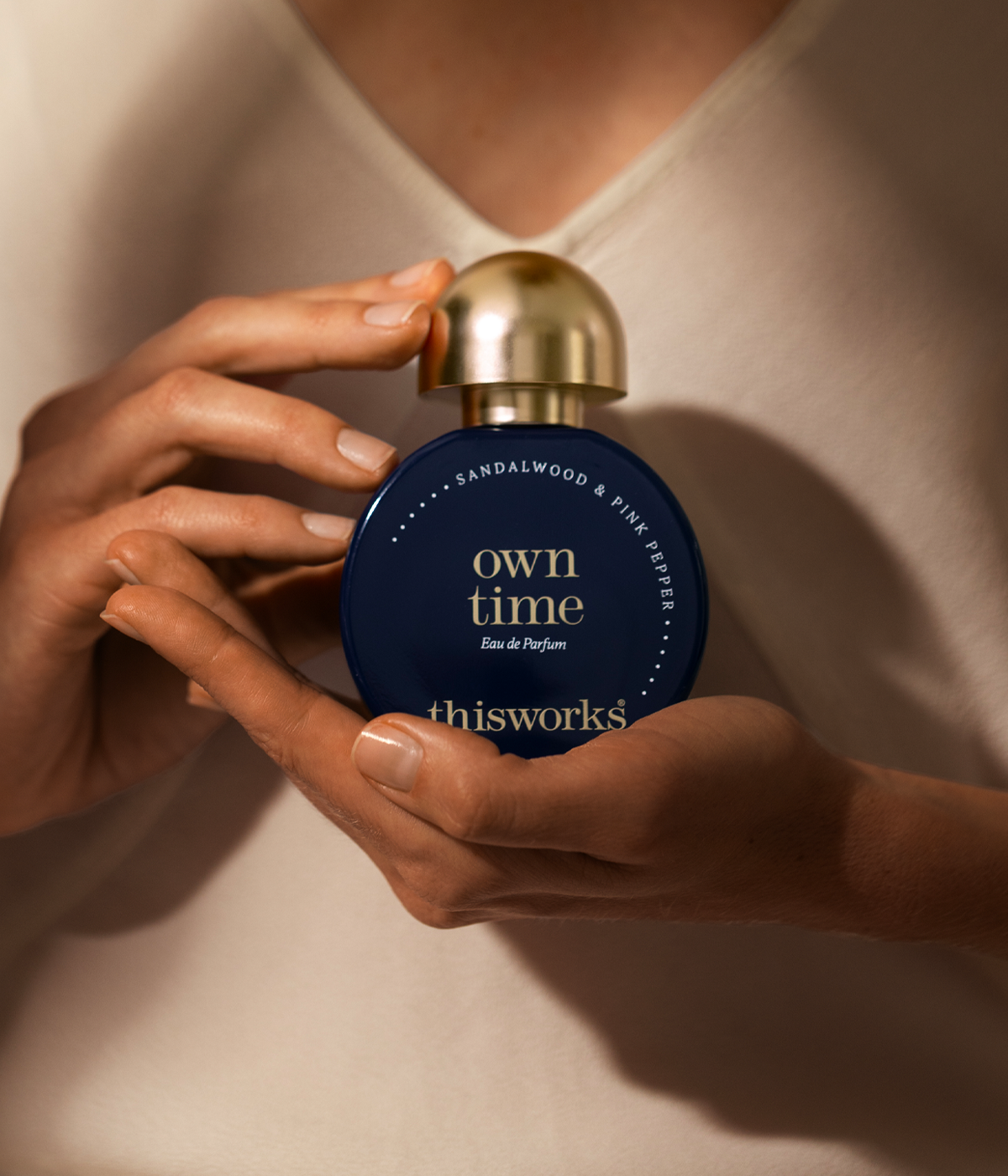
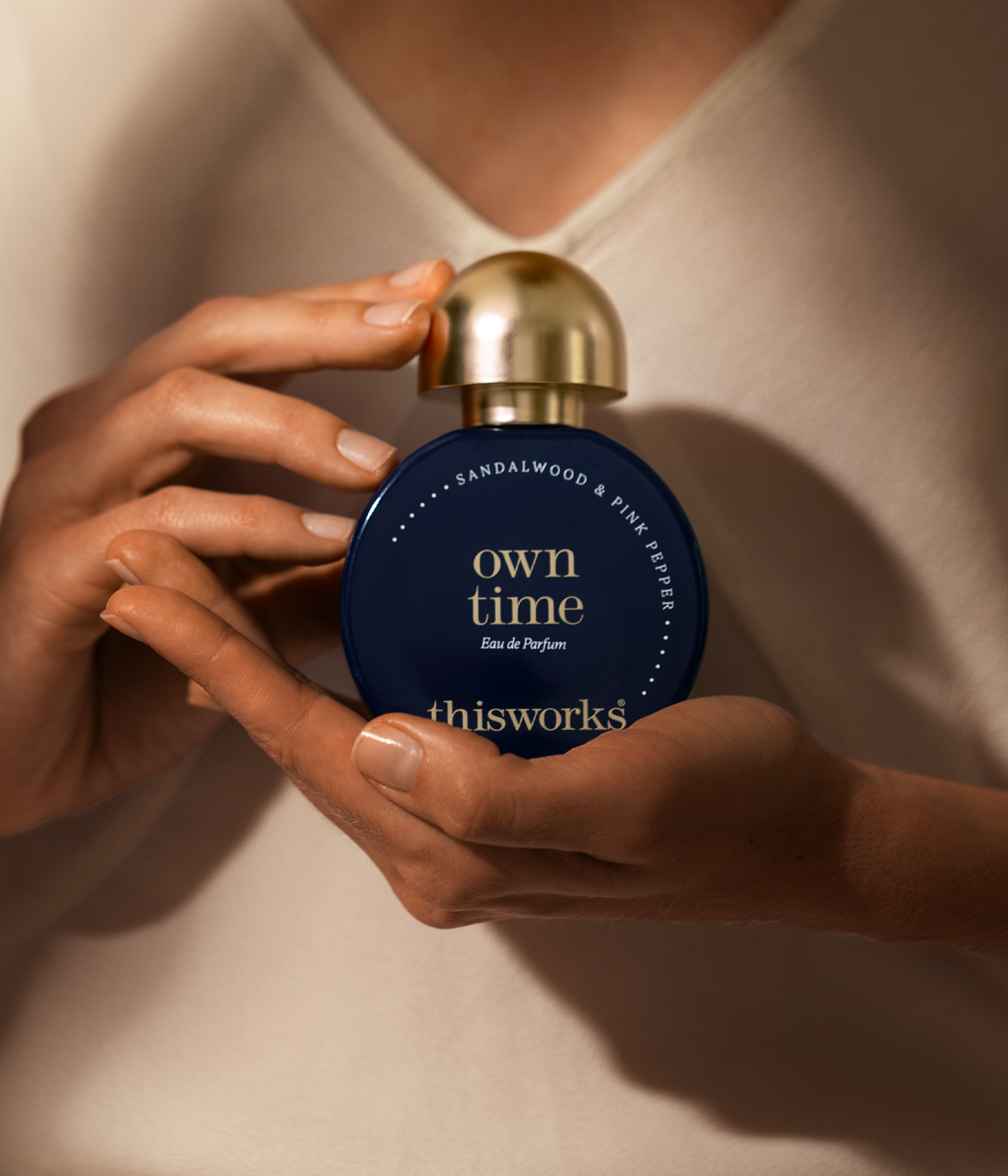
You might take a smell with you, like one of our fragrances, as an example.
You take yourself back.
You take your brain back.
Because your brain doesn’t necessarily know the difference, and your nervous system can begin to calm down by putting it back into a state where it was once calm.
That is a very, very powerful tool.
I’ve used that with my kids.
I’ve used it with my staff.
Esther: If I ask you what your resource is, what would it be?
Anna: You know what my equivalent is.
It’s being by the pool with you underneath a tree that had light shining through the leaves.
I paid attention to the nature, your voice.
In that moment, I felt incredibly safe and secure.
That is one of the visualisations I use in my life.
Esther: That is really cool.
Anna: This has been an amazing chat.
I’m so grateful for your time today.
You’ve been with us all day and we’ve had a lot of fun.
I’m going back into my London life in a few weeks, but I’ll be taking you with me and all of your great training and experience that I’ve been lucky enough to learn from you.
Thank you.
Esther: Thank you.
Anna: Thank you, my friend. I love you.
related posts
 expertsgetting on your nerves? episode 5: the September switchIn episode 5 of getting on your nerves?, Dr Anna Persaud is joined by medical doctor Dr Lana Gault to explore the September switch – how the transition from summer into autumn affects our physical health, mental wellbeing, sleep and...read post
 expertsgetting on your nerves? bonus episode: getting out of your head, into your bodyIn this Wellness Weekender special of getting on your nerves?, Dr Anna Persaud is joined by wellness expert and integrative therapist Esther Triviño to explore somatic yoga, interoception, nervous system regulation and how movement, breath, sound and sensory cues can...read post
 expertsgetting on your nerves? episode 4: wherever I lay my hatWhy can some people sleep anywhere, while others struggle as soon as their surroundings change? Dr Anna Persaud and Professor Gaby Badre explore sleep adaptability, circadian rhythm, nervous system regulation and how to become a more resilient sleeper when conditions...read post
 expertsgetting on your nerves? episode 2: the upper body editIn episode 2 of getting on your nerves?, Dr Anna Persaud is joined by Dr Lana Gault and This Works ambassador Mithra Nandu to explore how stress and nervous system dysregulation show up in the upper body. From jaw tension,...read post
 expertsgetting on your nerves? episode 1: signs you are stressedIn episode 1 of getting on your nerves?, Dr Anna Persaud is joined by medical doctor Dr Lana Gault to explore how stress first shows up in the body and mind. From burnout, fatigue and disrupted sleep to fight or...read post
 expertsgetting on your nerves? episode 3: the power of nowIn episode 3 of getting on your nerves?, Dr Anna Persaud is joined by psychotherapist and trauma expert Lauren Baird to explore why being present can feel so difficult. From negativity bias, fight or flight and the window of tolerance...read post
 sleep hygienecan you train your brain for bedtime?Can a familiar scent become a signal that it is time to sleep? Professor Gaby Badre explores the connection between scent, the brain and nervous system — and how repeated sensory cues may help support the transition from daytime alertness...read post
 sleep hygienewhen the brain won’t switch off: understanding chronic insomniaWhy can sleep remain difficult long after the original trigger has passed? Professor Gaby Badre explores the science of chronic insomnia, the hyperarousal that can keep the brain alert at night, and how the brain can be retrained for sleep.read post
